
From tiger cubs to titi monkeys, few things are cuter than a newborn zoo animal. But these adorable arrivals do not happen by chance! Behind the scenes, each Minnesota Zoo birth is carefully planned, often years in advance, with conservation and zoo experts from across the country acting as “matchmakers” as part of cooperative breeding programs called Species Survival Plans (SSPs).
Beginning in the 1980s, AZA (Association of Zoos and Aquariums)-accredited zoos decided to work together to save threatened species, forming the first SSPs. Designed to maintain a healthy, genetically diverse population of animals in human care, these programs serve as “genetic insurance policies” against extinction in the wild.
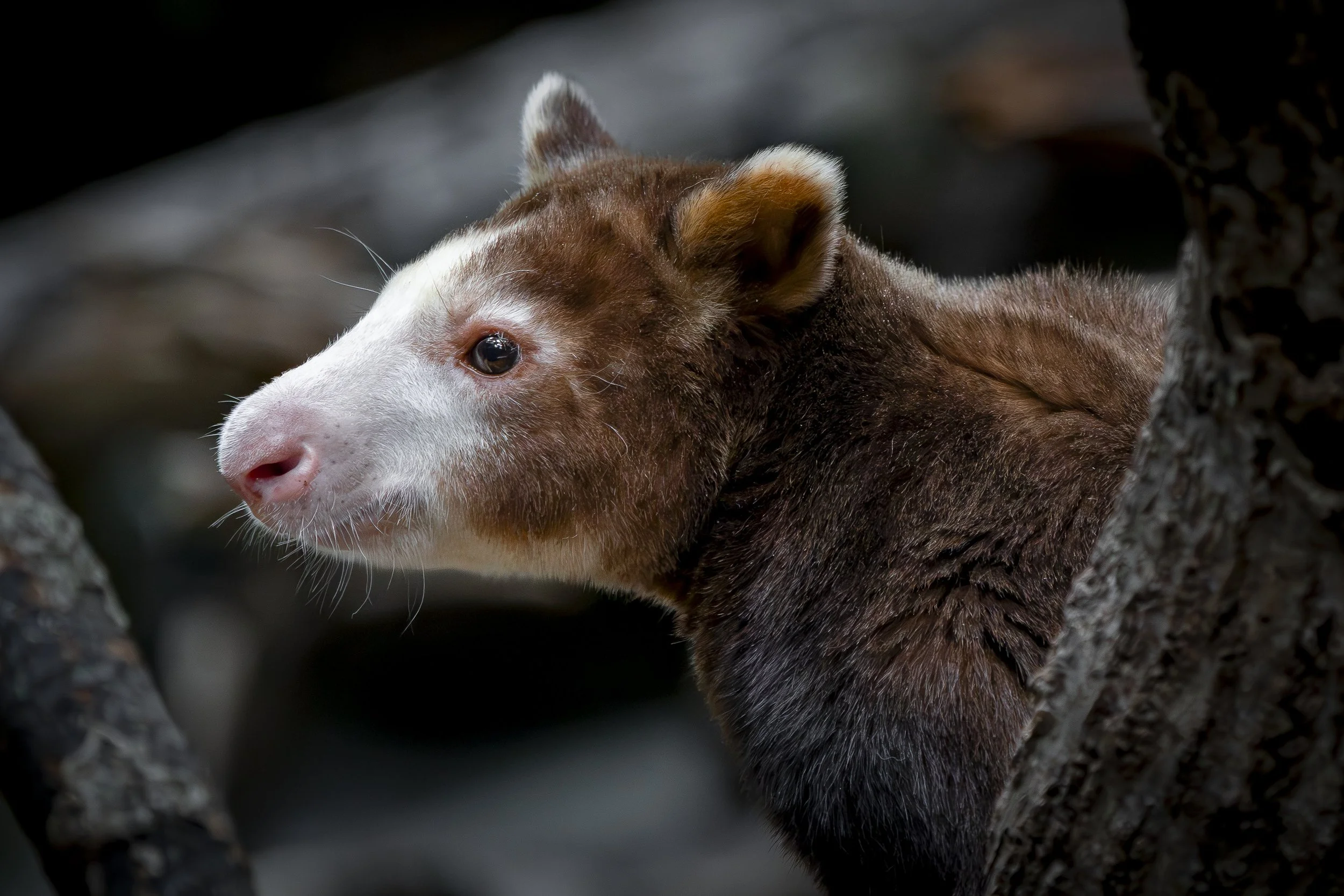
SSP coordinators use genetics to recommend which animals should be paired together to mate for the benefit of the entire population. This means an animal’s perfect match often comes from a facility in another state — like Kikori, a female tree kangaroo who arrived at the Minnesota Zoo from San Diego as a match for male Hewam, or Cad Bane, a male lynx who recently arrived from Massachusetts as a match for our female lynx, Torvi.
Sometimes an animal’s perfect match might even be in another country. Rumi, the Zoo’s new female binturong, arrived a few months ago as a match for male Felix all the way from Indonesia. She represents a rare, highly valuable addition to the Binturong SSP program, as she is a founder animal — meaning her genetics are not represented anywhere within the SSP’s current population.
Each of these pairs are the result of years of meticulous planning and commitment. Any offspring resulting from these new Zoo couples will represent a huge conservation win for their species and help safeguard the future of their wild counterparts.