
Poweshiek Skipperling Butterflies Take the Trip of a Lifetime

In a small prairie fen in eastern Michigan, nearly 1,200 critically endangered Poweshiek skipperling butterflies are spreading their wings. In just a few short weeks, most of them will be dead, having spent their brief adult life spans breeding and laying eggs.
But before these butterflies ever take flight, they take to the road — literally — on the trip of a lifetime that starts here at the Minnesota Zoo.
Each June, the Zoo’s pollinator team prepares hundreds of Zoo-reared skipperlings for transfer. Carefully, they move each skipperling chrysalis from blades of their favorite grass to specialized travel “hammocks” made of small pieces of mesh attached to wooden sticks (pictured right).
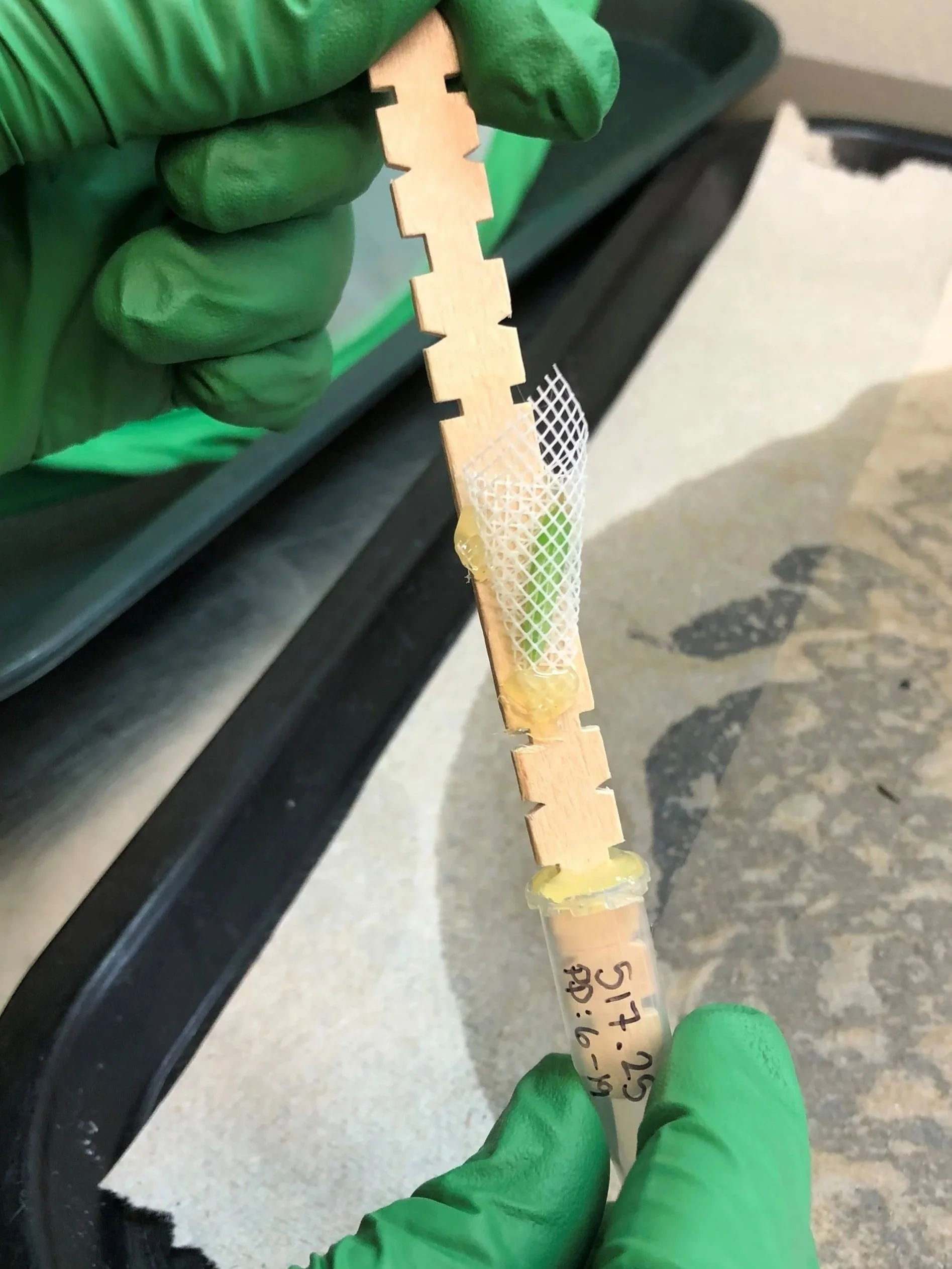
In the wild, Poweshiek skipperlings anchor their chrysalis to grass using a specialized hook on their bottom called a cremaster and a single strand of silk across their middle. But on a bumpy road trip, the hammock provides extra security.
The drive to the release site is 11-12 hours long. “It’s usually uneventful, but still stressful,” says Zoo conservation specialist Cale Nordmeyer, “just because you know you’re carrying precious cargo.”
Cale, with partners from the John Ball Zoo, will release a combined 1,200 Poweshiek skipperlings over a three-week period. A small number of these reared butterflies will be held at the zoos to produce the next generation of skipperlings.
The Zoo has been rearing Poweshiek skipperlings for almost a decade. They began these now-annual releases to restored Michigan prairie sites in 2024, marking the first-ever reintroduction of the species to the wild.
This groundbreaking work has captured widespread national attention, earning multiple awards including the prestigious 2025 North American Conservation Award from the Association of Zoos and Aquariums.
Incredible conservation wins like these are not possible without the continued support of Foundation donors like you, who help advance the Zoo’s wildlife-saving mission.