
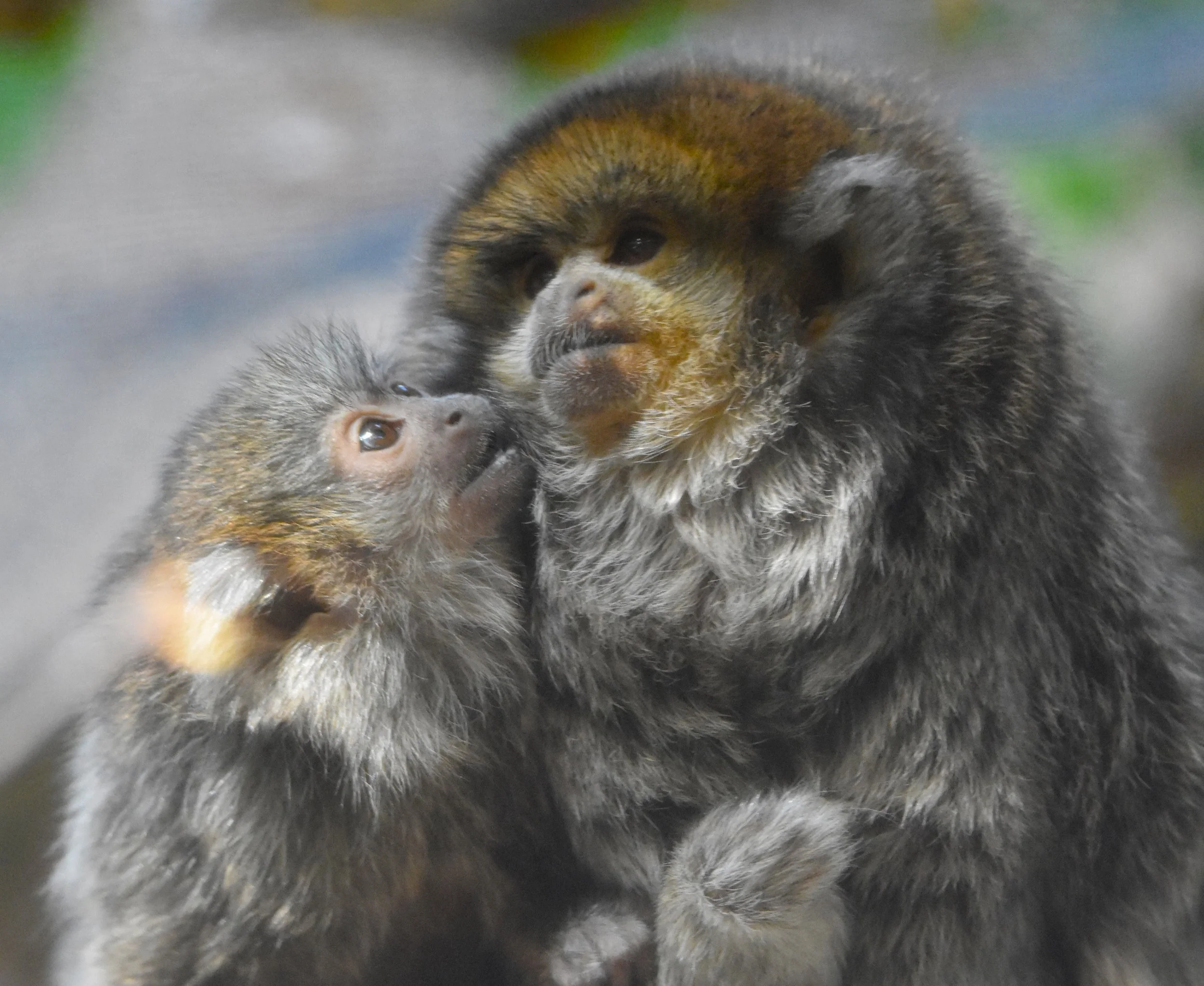
After a successful match and a well-timed introduction, the next chapter begins — pregnancy and birth! From quick pregnancies to year-long gestations, each species follows a unique path to parenthood.
For some animals, this process moves quickly. Species like lynx and binturong have relatively short gestation periods lasting around two to three months. Mothers will retreat to a quiet den or nest box, where they can give birth and provide constant care to their young. Litters range from just one to as many as six offspring, each weighing only a few hundred grams at birth. Behind the scenes, animal care teams are ready with plans to step in if needed, ensuring both mom and babies stay healthy during these critical early days.
For other species, pregnancy is a marathon rather than a sprint. Asian wild horses have a gestation period of nearly a full year! By the time a foal is born, it is mobile and on its feet within hours. Even so, first-time mothers can face challenges and may struggle to provide care or even reject their young. In some cases, like the birth of Asian wild horse foal Marat, animal care staff may need to step in to ensure a newborn has the best possible chance to thrive. For Marat, this meant placing him with a foster mother, a domestic horse named Alice.
And then there are more unique species, like the tree kangaroo. With an average gestation period of only 45 days, their young, called joeys, are born highly underdeveloped. Immediately after birth, the tiny joey crawls into mom’s pouch, where it will continue growing and developing for the next seven to 10 months.
No matter the species, every birth at the Minnesota Zoo is the result of careful planning, expert care, and a deep commitment to conservation. Each new Zoo arrival is more than just an adorable baby — it’s a vital step toward protecting the future of wildlife.